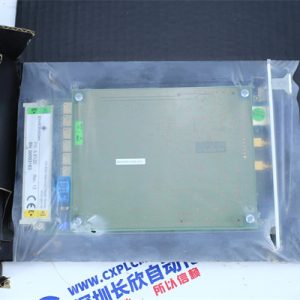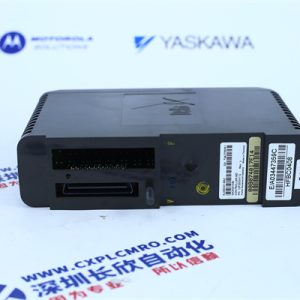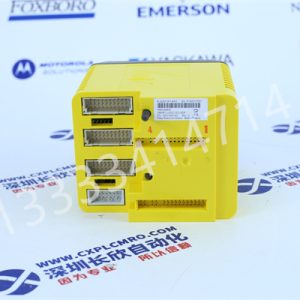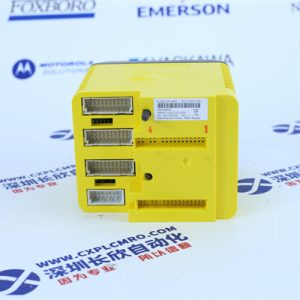
Description
| Product Model | VME-ACRTC-21 |
| Manufacturer | Emerson |
| Product Category | VMEbus Real-Time Clock (RTC) Module |
| Bus Interface | VMEbus (VME64 compatible, slot-dependent) |
| Primary Function | Hardware real-time clock and timekeeping for VME systems |
| Form Factor | VME Eurocard module (3U/6U to be confirmed from label) |
| Mounting | VME chassis / backplane slot |
| Battery | On-board RTC backup battery (type and condition to be verified) |
| Typical Applications | Event time-stamping, sequence logging, time synchronization, legacy VME control |
| Availability | Obsolete / surplus; verify revision, firmware, and battery status before purchase |
Product Introduction
The Emerson VME-ACRTC-21 is a VMEbus-based real-time clock module designed to provide hardware timekeeping for industrial VME control systems. In legacy automation, test, and process control platforms, the VME-ACRTC-21 serves as a dedicated RTC resource that maintains accurate time even when the host system is powered down, typically through an on-board backup battery. This allows controllers, data acquisition systems, and sequence managers to time-stamp events, log alarms, coordinate scheduled tasks, and maintain consistent time references across distributed VME racks.
As part of Emerson’s legacy VME product ecosystem, the VME-ACRTC-21 is most relevant in systems where software-only timekeeping is insufficient or where the host CPU does not include a reliable battery-backed clock. By providing a hardware RTC accessible over the VME backplane, the module helps ensure that critical process records, fault logs, and batch reports retain a consistent time base. This is particularly important in long-running installations where system uptime, audit trails, and event correlation depend on accurate clock data.
The VME-ACRTC-21 is typically used as a replacement or spare module for existing Emerson or compatible VME chassis. Because this is an obsolete industrial component, compatibility depends on mechanical fit, VME slot assignment, address configuration, driver availability, and battery condition. Engineers should treat the VME-ACRTC-21 as a legacy spare rather than a new-design component.
 Core Advantages and Technical Highlights
 Core Advantages and Technical Highlights
Hardware timekeeping for legacy VME systems: The Emerson VME-ACRTC-21 provides a dedicated real-time clock that operates independently of the main CPU clock. This reduces reliance on software timers and helps maintain accurate time after power loss, provided the backup battery remains functional.
Event logging and sequence coordination: In process control, test equipment, and machine automation, accurate time-stamping improves traceability. The VME-ACRTC-21 can support alarm logs, batch records, fault histories, and sequence timers where time accuracy affects diagnostics and reporting.
Battery-backed time retention: With an on-board backup battery, the VME-ACRTC-21 can preserve clock data during short power interruptions or maintenance outages. Battery condition should always be checked before commissioning, especially for surplus or long-stored modules.
Direct VME backplane integration: Installing the VME-ACRTC-21 into a VME chassis allows the host controller to access the RTC through the backplane without additional external wiring. This simplifies integration compared with standalone clock devices that require separate serial or network interfaces.
Practical obsolescence support: For plants maintaining older Emerson VME installations, a verified VME-ACRTC-21 can restore timekeeping functionality without migrating the entire control platform. It is especially useful when original documentation is limited but the host system still requires a hardware RTC.
Typical Application Scenarios
Legacy process control systems: The Emerson VME-ACRTC-21 can provide time references for older process controllers that need accurate event logging, batch timing, or alarm history. It is particularly valuable when the host CPU lacks a reliable battery-backed clock.
Test and measurement racks: In automated test equipment, the VME-ACRTC-21 can time-stamp measurement results, calibration records, and fault events. This helps maintain traceability in long-duration tests or multi-step test sequences.
Machine control and sequencing: Packaging machines, material handling systems, and special-purpose equipment built on VME platforms may use the VME-ACRTC-21 to coordinate timed operations, maintenance counters, and shift-based reporting.
Data acquisition and logging: For VME-based DAQ systems, the module supports consistent time-stamping of sampled data. This improves correlation between process variables, alarms, and operator actions.
Spare and retrofit projects: When an existing VME RTC module fails, the VME-ACRTC-21 can be evaluated as a replacement. Engineers should confirm the VME slot type, address map, driver support, and battery status before returning the system to production.
Related Model Recommendations
 Related Model Recommendations
- Emerson VME-ACRTC series — Related Emerson VMEbus RTC modules that may share the same family architecture; exact cross-reference requires label and revision verification.
- Emerson / VMIC VMEbus CPU modules with RTC — Some VME single-board computers include on-board real-time clocks, which may reduce the need for a separate RTC card if the host platform allows migration.
- Motorola / NXP MVME series SBCs — Legacy VME single-board computers that often include battery-backed RTC resources for embedded control applications.
- GE Fanuc / Abaco VMEbus CPU modules — Alternative VME processors with integrated timekeeping, useful when replacing entire VME slots rather than individual RTC cards.
- Standalone industrial RTC / time servers — For new designs, Ethernet-based NTP/PTP time servers or serial RTC modules may replace legacy VME RTC cards if the control architecture can be updated.
Installation, Commissioning and Maintenance Instructions
Before installing the Emerson VME-ACRTC-21, power down the VME chassis unless hot-swap operation is explicitly supported. Verify the module label for model, revision, serial number, and battery type. Confirm that the VME slot, address settings, and interrupt assignments match the host system configuration.
During commissioning, set the correct date and time and verify that the host controller can read the RTC registers or driver interface. Check that the backup battery voltage is within specification; replace the battery if the module has been stored for an extended period. During maintenance, inspect the front panel connector, backplane seating, and battery compartment for corrosion or leakage. If the VME-ACRTC-21 is held as a spare, store it in an anti-static bag and periodically verify battery condition and time retention.