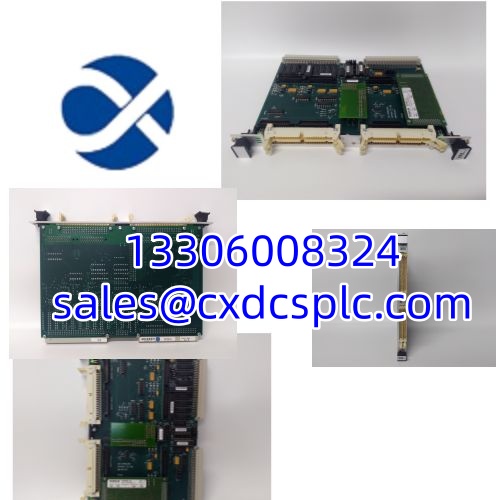
Description
| Product model | VME-IGC-2M |
| Manufacturer | Emerson |
| Product category | VMEbus intelligent gateway / communication interface module |
| Bus standard | VMEbus |
| Primary function | Intelligent gateway or communication interface between VME systems and external networks or subsystems |
| Typical system use | Legacy process control, industrial automation, and VME-based instrumentation |
| Product status | Obsolete / legacy spare; availability depends on surplus inventory |
Product Introduction
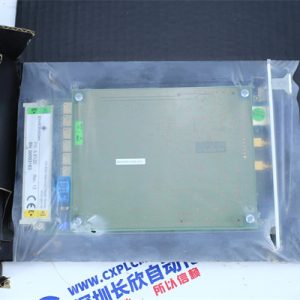
The Emerson VME-IGC-2M is a VMEbus-based intelligent gateway or communication interface module associated with Emerson’s legacy industrial control and process automation product families. In VME-based systems, modules of this type typically provide protocol conversion, network interfacing, or subsystem communication, allowing a VME controller to exchange data with field devices, higher-level control systems, or remote I/O networks.
The “IGC” designation suggests an Intelligent Gateway or Communication function, while “VME” identifies the VMEbus mechanical and electrical form factor. The VME-IGC-2M would normally be installed in a VME crate or chassis, where it communicates with the system controller through the VME backplane. Such modules are commonly found in older process control platforms, test and measurement systems, power generation equipment, and specialized industrial automation architectures that predate modern Ethernet-native controllers.
Because the VME-IGC-2M is a legacy component, it is most relevant for maintenance, replacement, and obsolescence management rather than new system design. Its value lies in preserving existing VME-based installations where replacing the entire controller platform would be impractical. Before deployment, the module’s firmware, protocol support, and slot requirements must be confirmed against the original system configuration.
 Core Advantages and Technical Highlights
 Core Advantages and Technical Highlights
Legacy VME system compatibility:
The VME-IGC-2M supports continued operation of existing VMEbus-based control systems. For plants or equipment that still rely on Emerson VME modules, a verified replacement can restore communication paths without requiring a full platform migration.
Intelligent gateway functionality:
Modules in this class typically handle protocol translation, message routing, or interface management between the VME controller and external networks. This reduces the processing burden on the main CPU and helps isolate communication faults from core control tasks.
Modular VME architecture support:
As a VME plug-in module, the VME-IGC-2M integrates into a standardized chassis with other processor, I/O, and communication cards. This modular design simplifies replacement, diagnostics, and configuration compared with custom-built communication hardware.
Obsolescence management value:
For systems that cannot be easily upgraded due to validated processes, certification requirements, or mechanical constraints, the VME-IGC-2M provides a practical spare-parts option. A tested unit helps reduce unplanned downtime while a longer-term migration strategy is developed.
Typical Application Scenarios
Legacy process control systems:
The VME-IGC-2M may be used in older Emerson or Emerson-associated control platforms where VMEbus hardware serves as the backbone for processor and I/O modules. It can support communication between the VME controller and external devices or subsystems.
Industrial automation and special-purpose machinery:
Equipment builders that previously used VME-based controllers may still support installed machines with legacy communication modules. The VME-IGC-2M can serve as a replacement interface card when the original module fails.
Power, energy, and infrastructure control cabinets:
VME systems have historically appeared in power generation, turbine control, and infrastructure monitoring applications. The VME-IGC-2M may be applicable where an existing VME crate requires a communication or gateway module to maintain system connectivity.
Test, measurement, and instrumentation platforms:
Some legacy test systems use VME crates for high-speed data acquisition and instrument control. A module like the VME-IGC-2M can provide the communication interface needed to integrate the VME system with host computers or networked instruments.
Related Model Recommendations
 Related Model Recommendations
- DeltaV VIM2 — Emerson DeltaV M-series Virtual I/O Module 2 for non-intrusive I/O simulation with Mimic Simulation Software.
- Emerson Ovation I/O modules — Legacy and current I/O cards for Emerson Ovation distributed control systems, used in power and process applications.
- VMEbus processor modules — Replacement CPU or controller cards for legacy VME-based automation and instrumentation systems.
- VMEbus communication modules — Ethernet, serial, or fieldbus interface cards compatible with VME crates.
- VME power supplies and carriers — Chassis power and backplane components required for stable VME system operation.
- DeltaV M-series carriers — Emerson DeltaV hardware carriers for modern process control I/O, not a direct VME replacement but relevant for migration planning.
Installation, Commissioning and Maintenance Instructions
Before installing the VME-IGC-2M, confirm the VME chassis power rating, slot compatibility, and backplane voltage requirements. Power down the VME crate unless hot-swap capability is explicitly supported by the system design. Record the original module position, jumper settings, firmware version, and communication parameters before removal.
Verify that the replacement VME-IGC-2M matches the original hardware revision and firmware configuration. Check all connectors, backplane pins, and front-panel interfaces for damage or contamination. During commissioning, confirm that the module is recognized by the system controller, that communication links are established, and that no address or protocol conflicts exist.
For long-term reliability, maintain clean VME connectors, ensure adequate chassis ventilation, and store spare modules in anti-static packaging. Because the VME-IGC-2M is a legacy module, keep documentation of firmware versions, configuration files, and system integration settings. If repeated communication faults occur, evaluate whether migration to a current Emerson or third-party communication platform is more sustainable than continued reliance on obsolete VME hardware.