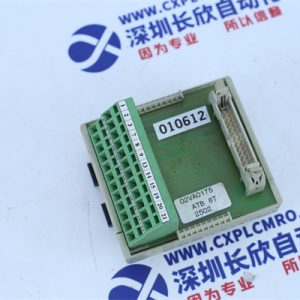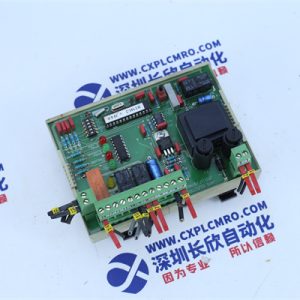
Description
| Product model | IOP351 |
| Manufacturer | Metso (Valmet) |
| Product category | High-Performance I/O Processor Module |
| System platform | Metso DNA Distributed Control System (DCS) |
| Module type | Advanced redundant I/O processing unit |
| Supported I/O cards | Up to 8 local I/O slots (analog, digital, RTD, thermocouple, pulse) |
| Communication protocol | DNA Bus, Modbus TCP/IP, OPC UA, Ethernet/IP (optional) |
| CPU processing power | 32-bit RISC processor, enhanced performance over IOP304/IOP34x series |
| Memory (RAM/Flash) | 128 MB RAM, 64 MB Flash |
| Redundancy support | Full hot-standby redundancy with automatic failover |
| Operating temperature | 0°C to 55°C (32°F to 131°F) |
| Installation method | DIN rail mounting in 19-inch control cabinet |
| Real-time performance | Deterministic scan cycles, sub-millisecond I/O update |
| Diagnostic capabilities | Comprehensive self-diagnostics, online health monitoring |
Product introduction
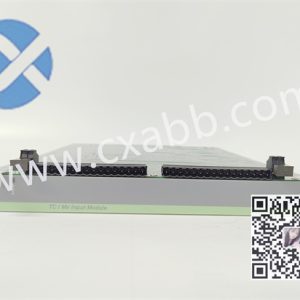
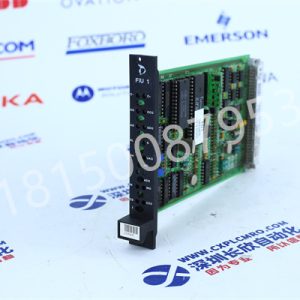
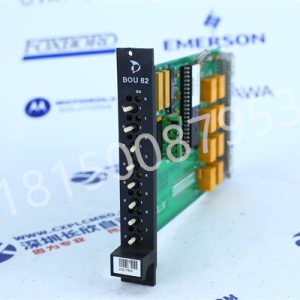
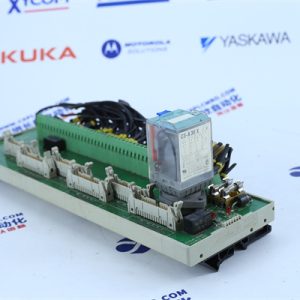
The Metso IOP351 is a high-end input/output processing module designed for the Metso DNA automation platform, serving as a powerful and reliable interface between the central control system and field instrumentation in industrial process environments. As a key component of the Metso DNA DCS, the IOP351 is engineered for demanding applications requiring high-speed data acquisition, precise control execution, and maximum system availability. It supports a wide range of analog and digital signal types, making it ideal for complex control strategies in pulp and paper, power generation, chemical processing, and mining industries.
Functionally, the IOP351 acts as a dedicated I/O controller that manages up to eight local I/O cards, handling signal conditioning, data conversion, diagnostics, and communication with the main controller via the high-speed DNA Bus. It is designed for use in both standard and mission-critical applications, with full support for hot-standby redundancy to ensure zero downtime during hardware failures or maintenance. The module features enhanced processing power and increased memory compared to earlier models like the IOP304 and IOP345, enabling faster scan rates and support for more complex control logic at the I/O level.
The IOP351 integrates seamlessly with the Valmet DNA engineering environment (formerly Metso DNA), allowing for centralized configuration, real-time monitoring, and advanced diagnostics through a unified software interface. Its modular architecture supports mixed I/O types—such as 4–20 mA analog inputs, digital on/off signals, RTD temperature sensors, and pulse counters—within a single chassis, providing exceptional flexibility for diverse automation needs.
IOP351 METSO
Core advantages and technical highlights
High-performance processing engine:
The Metso IOP351 is equipped with an upgraded 32-bit RISC processor and expanded memory (128 MB RAM, 64 MB Flash), delivering significantly faster processing than previous-generation I/O processors. This enables support for high-density I/O configurations and advanced control algorithms executed directly at the I/O level, reducing load on the central controller and improving system responsiveness.
Full redundancy with seamless failover:
The IOP351 supports true hot-standby redundancy, where a secondary unit remains synchronized in real time with the primary. In the event of a failure, the standby module takes over within milliseconds without interrupting I/O processing—critical for safety systems, boiler controls, and continuous production lines where even brief outages can lead to quality or safety issues.
Universal I/O support and scalability:
Each IOP351 chassis accommodates up to eight I/O slots, supporting a wide variety of Metso DNA I/O cards, including:
- AIO350: Analog input (4–20 mA, ±10 V)
- DIO330: Digital input (24 VDC)
- DIO340: Relay output
- TIO320: Thermocouple/RTD input
- PIO310: Pulse input for flow meters
This flexibility allows the IOP351 to serve as a universal I/O processor in mixed-signal applications.
Advanced communication and integration:
In addition to the proprietary DNA Bus, the IOP351 supports standard industrial protocols such as Modbus TCP/IP, OPC UA, and optionally Ethernet/IP, enabling seamless integration with third-party systems, SCADA platforms, and enterprise-level data systems. This makes it ideal for digitalization and Industry 4.0 initiatives.
Comprehensive diagnostics and predictive maintenance:
The module features built-in diagnostics for power supply, backplane communication, I/O card status, and field signal integrity. Faults are reported in real time through the Valmet DNA system, allowing operators and maintenance teams to proactively address issues before they impact production.
Future-ready and long-term supported:
As part of the Valmet DNA ecosystem, the IOP351 benefits from ongoing firmware updates, cybersecurity enhancements, and global technical support. Its backward compatibility ensures smooth migration from older Metso I/O processors, protecting customer investment in existing infrastructure.
Typical application scenarios
The Metso IOP351 is deployed in high-availability and high-complexity automation environments. In pulp and paper mills, it controls critical sections of the paper machine, such as the wet end, press section, and dryer control, where precise analog and digital signal processing directly affects product quality and machine efficiency.
In power plants, the IOP351 is used in boiler control systems, turbine auxiliary monitoring, and emissions control, handling hundreds of temperature, pressure, flow, and status signals with high reliability. Its redundancy ensures uninterrupted operation during maintenance or component failure.
In chemical and petrochemical facilities, the IOP351 supports batch control, reactor monitoring, and safety instrumented systems (SIS) by providing a robust interface between the DCS and field devices in hazardous areas, often in conjunction with intrinsic safety barriers.
It is also used in mining and mineral processing for slurry pumping stations, thickener control, and flotation cell automation, where mixed signal types and harsh environmental conditions demand a rugged, high-performance I/O solution.
Related model recommendations
Metso IOP304: Entry-level redundant I/O processor, suitable for basic analog/digital applications.
Metso IOP314: Mid-range I/O processor with enhanced performance, often used in non-redundant roles.
Metso IOP345: Digital-focused I/O processor for high-density discrete control.
Metso PCD230: Standalone programmable controller for local logic execution.
Metso AIO350: 16-channel analog input module (4–20 mA) for process signals.
Metso DIO330: 32-channel digital input module for status monitoring.
Metso TIO320: 16-channel RTD/thermocouple input module for temperature.
Metso FIO311: Fiber optic interface module for extending DNA Bus.
Metso PSM302: Redundant 24 VDC power supply for IOP351 chassis.
Metso CIO312: Communication interface module for Profibus or Modbus integration.
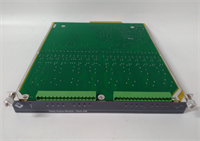
IOP351 METSO
Installation preparation
Before installing the Metso IOP351, ensure the control cabinet meets environmental specifications (temperature, humidity, EMI). Mount the DIN rail securely and verify grounding. Use only approved power supplies (e.g., Metso PSM302) for redundant 24 VDC power. Discharge static electricity with an ESD wrist strap. Insert the IOP351 firmly into the backplane and secure with the locking clip. For redundancy, install both primary and standby units before powering. Label all DNA Bus and field wiring to prevent commissioning errors.